
Family support
The Family Support team aims to drive systems-level change in our region by establishing sustainable, clinical and community-focused support structures for domestic and family violence, child sexual abuse and homelessness through:
- responding to domestic and family violence, sexual violence and child sexual abuse by embedding trauma-informed, integrated care models across primary care and the community sector
- shifting homelessness support from emergency-driven to preventive, health-integrated care. This model reduces dependency on emergency services by aligning homelessness intervention with health services, promoting stable, long-term care access.

Key achievements
- The Family Support team successfully hosted a 3-day workshop to facilitate collaboration among representatives from all PHN pilot sites, Department of Health representatives and colleagues from the National Centre for Action on Child Sexual Abuse.
- The team successfully led a co-design process with a range of stakeholders to refine the model of care and approach for supporting primary care and recovery pilots.
- The Family Domestic and Sexual Violence (FDSV) pilot broadened its focus to include child sexual abuse. This expansion resulted in the procurement of service providers for Local Link and Primary Care Workforce Capacity Building, incorporating an integrated support model for victim–survivors of FDSV and child sexual abuse.
- The team completed the co-design process for Supporting Recovery Pilot Execution, leading to the commissioning of trauma-informed recovery care services. As a result, there are 10 community-led projects to build capacity for recognition of, response to and prevention of violence. Of the 10 successful projects, 8 are new providers.




Case studies



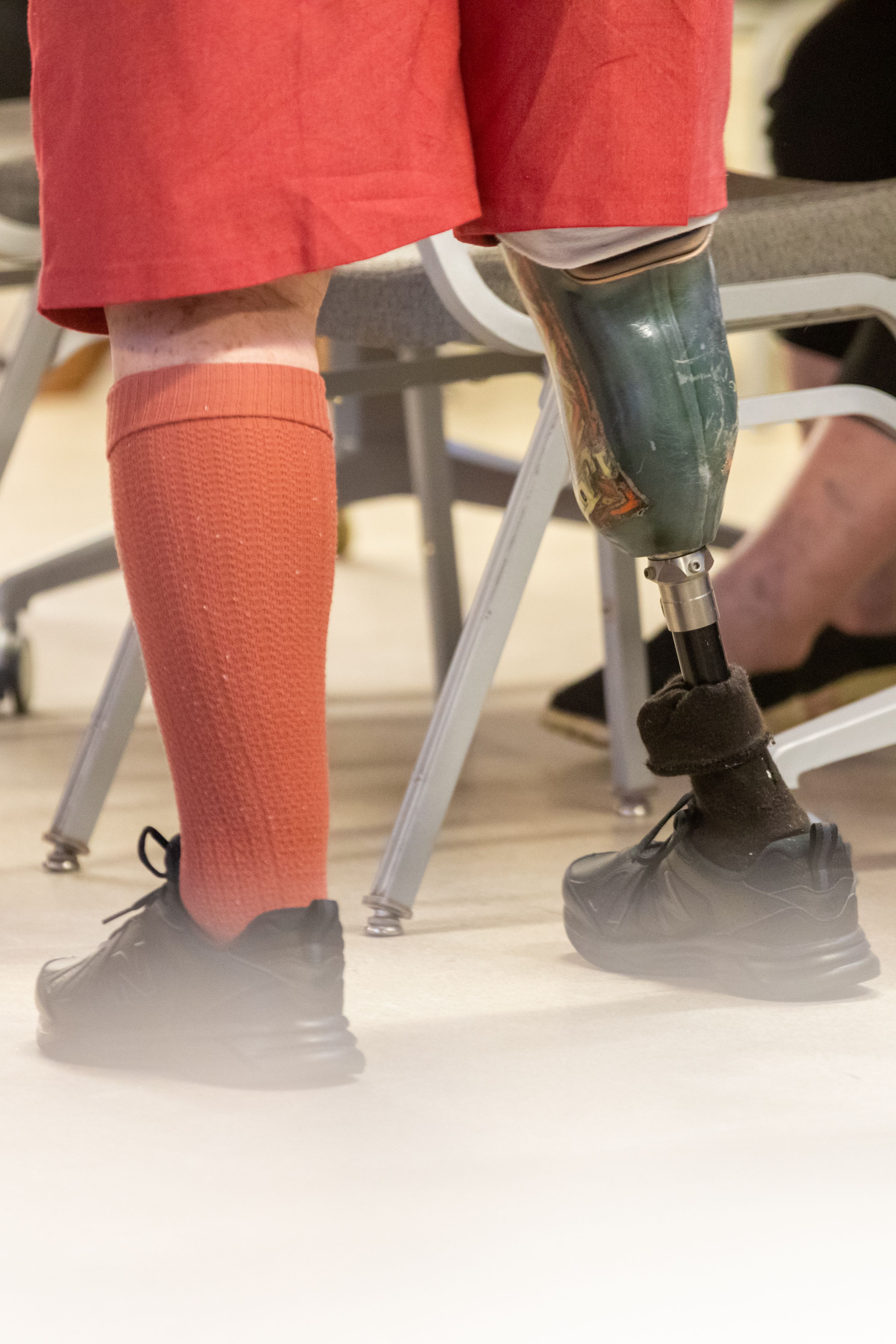
Program participant at Amputees and Families Support Group, Logan
Program participant at Amputees and Families Support Group, Logan
In-practice support for GPs caring for patients experiencing domestic and family violence, sexual violence or child sexual abuse.
A Local Link team was providing extensive support to a GP clinic through regular training and co-location. While the team valued the Lead GP’s engagement with the program, they were concerned about minimal collaboration with the Local Link team.
The team devised a specific strategy of regularly discussing in training at the clinic how they could offer Local Link support to patients, breaking down myths about what domestic and family violence support looks like and regularly re-iterating how victims are safer when services are working together.
Following training, the Local Link team received their first referral from this GP but the information was insufficient. After multiple follow-up conversations, the Local Link team was able to engage with the patient and identify significant safety concerns. From this, the Local Link team could coordinate with the GP to provide essential assessment of these injuries.
The Local Link team learned how to slowly build engagement by being flexible and adaptable to help the GP clinic staff understand the importance of the Local Link specialist skillset in engaging with victim–survivors.
Learn more about our Local Link service for general practices →
Overcoming complex health and social challenges with integrated team-based care
A consumer living in social housing had a long history of foot ulcers with 4 hospital admissions in the past 12 months.
They had discharged themselves against medical advice after the treating team recommended an amputation, which they declined. The consumer has a background of trauma and poor engagement with healthcare services, resulting in ongoing challenges to their overall health.
Being unable to move from the couch for 3 weeks following self-discharge, they had limited ability to maintain personal hygiene, prepare meals, and access healthcare and community services.
While they agreed to visits from the nursing team, they declined assistance with personal hygiene, wound care and other daily living tasks. Case conferences with healthcare providers and support workers led to a recommendation for a capacity assessment, as sepsis was a high risk without hospital intervention.
The support team discussed drafting a ‘statement of choice’ to document the consumer’s preferences and needs. While the consumer was hesitant to address all aspects, they expressed a desire for life-prolonging measures such as resuscitation, though they continued to decline hospitalisation or amputation.
A plan was set for the GP to visit again, with the nursing team maintaining daily visits over the weekend. The consumer has since consented to a below-knee amputation and recovered in hospital.
 Built with Shorthand